The Lone Wolf: Why Asking for Help Feels So Hard

You've probably met a Lone Wolf before, you may even be one.
They're the ones who say "I've got it!" before you've finished offering to help. The friend who tells you about the hard thing only after it's over. The partner who goes quiet and handles it, and doesn't understand why that leaves you feeling shut out.
From the outside, the Lone Wolf looks strong. Capable. Independent. Often admired.
On the inside, it's a different story.
What Is the Lone Wolf Pattern?
The Lone Wolf is a protective pattern built on one core belief: If I need others, I'll be disappointed, rejected, or controlled.
So the Lone Wolf stops needing. Or more accurately, stops showing need. Feelings get handled privately. Problems get solved alone. Care from others feels uncomfortable, even intrusive, and gets deflected with a joke or a quick "I'm fine."
Today, many people call this hyper-independence. Attachment pioneer John Bowlby had an earlier name for it: compulsive self-reliance. It isn't a personality trait. It's an adaptation, a way of staying safe when depending on others once felt risky.
Research on attachment has found that children who learn this pattern may look calm and unbothered on the outside while their bodies are still registering distress underneath. The need never went away, it just got pushed aside.
Signs You Might Be a Lone Wolf
You say "I've got it" before anyone finishes offering
You share hard news only after you've already handled it
Receiving care feels awkward, intrusive, or even suspicious
You deflect concern with humor or a quick "I'm fine"
The people closest to you sometimes feel shut out, even when you're trying to protect them
How the Lone Wolf Develops
We're all born needing. Needing to be held, soothed, understood, and seen. When those needs are met often enough, we learn that reaching out works. When they're missed again and again, a child adapts.
The Lone Wolf often forms when reaching out was met with:
Dismissal (unseen). You brought your feelings and they were brushed aside. You're fine. Stop crying. You learned your inner world didn't register, so you stopped sharing it.
Criticism (criticized). Needing something led to being shamed for it. Why are you so sensitive? You learned that vulnerability invited judgment.
Misreading (misunderstood). You tried to express what was happening inside, and it was misinterpreted or turned into something else. You learned it was easier to keep it to yourself.
Overwhelm (burdensome). The adults around you were already stretched thin, struggling, or carrying their own pain. You learned that your needs added weight to an already heavy house.
Strings attached (controlled). Help came, but with control, guilt, or a price. You learned that depending on someone meant losing yourself.
Each of these teaches the same lesson in a different accent: It's safer to handle it yourself.
The Orphan and the Lone Wolf
In my recent post on unprocessed grief, I wrote about feeling orphaned. Not literally, but in that deep, archetypal sense: the feeling that the ground could fall out from under you at any moment, and that no one is coming. Maybe because no one did.
I've come to see the orphan and the Lone Wolf as two different things, though they often live in the same person.
The orphan is a feeling. It's the ache of being alone in the world, unprotected, without a safe place to land.
The Lone Wolf is a strategy, it's what we build in response. If no one is coming, then I'll stop waiting. I'll handle it myself. I won't ask, so I can't be disappointed, or made fun of, or let down again.
The orphan says, "No one is coming."
The wolf answers, "Then I won't need anyone."
This distinction matters, because each one needs something different in order to heal.
Healing the Lone Wolf
The Lone Wolf is a practiced protector. It has been doing its job for years, often decades.
Healing this part begins with parts work: learning to tell the different parts of you apart, and coming to relate to the Lone Wolf not as who you are, but as a part of you doing a very specific job.
And here's what surprises most people: this part can be thanked. It stepped in when no one else did, it kept you functioning, and it got you through. It isn't the enemy, and it doesn't need to be fought or forced into retirement. It needs to be understood, and eventually, to learn that it doesn't have to work so hard anymore.
Healing the Orphan
The orphan needs something else entirely. The orphaned part of you doesn't need managing, it needs to be held, to be seen and to be deeply validated.
Its healing is identity work: discovering who you really are, why you matter, and that your worthiness was never up for debate. You are human, and you were always worth coming for.
What the Wolf Has Been Guarding
Sometimes these two parts are connected in a way we don't see at first. The Lone Wolf is usually standing guard over the orphan.
In parts work, we call the most tender, hidden parts of us exiles. The orphaned part of you, the one who feels so unsteady, like the ground might give way, is exactly what the wolf has been protecting all along. That's true of every protective pattern. Each one is working to keep an exiled part of you out of sight.
So the key isn't to defeat your protectors. It's to meet yourself with deep compassion, build a relationship with those protective parts so they can soften, and gently welcome your exiles home.
This kind of healing happens in relationship. For a Lone Wolf, letting someone in, even a little, is often the most courageous step of all.
Find Your Protective Pattern
Not sure which protective pattern runs strongest in you? Take the free Protective Pattern Quiz and find out in just a few minutes.
And if you're tired of carrying it all on your own, I'd love to hear from you.
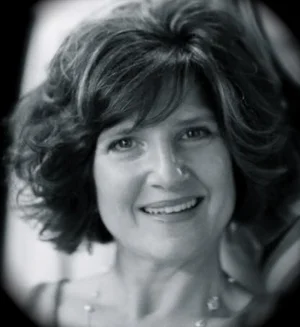
Darcy Plunkett is a licensed therapist and the founder of Deeper Level Healing. She specializes in protective patterns, attachment, and the kind of deep transformation that goes beyond insight into actual change. She writes about what it means to heal from the inside out, and she is actively living that question herself.